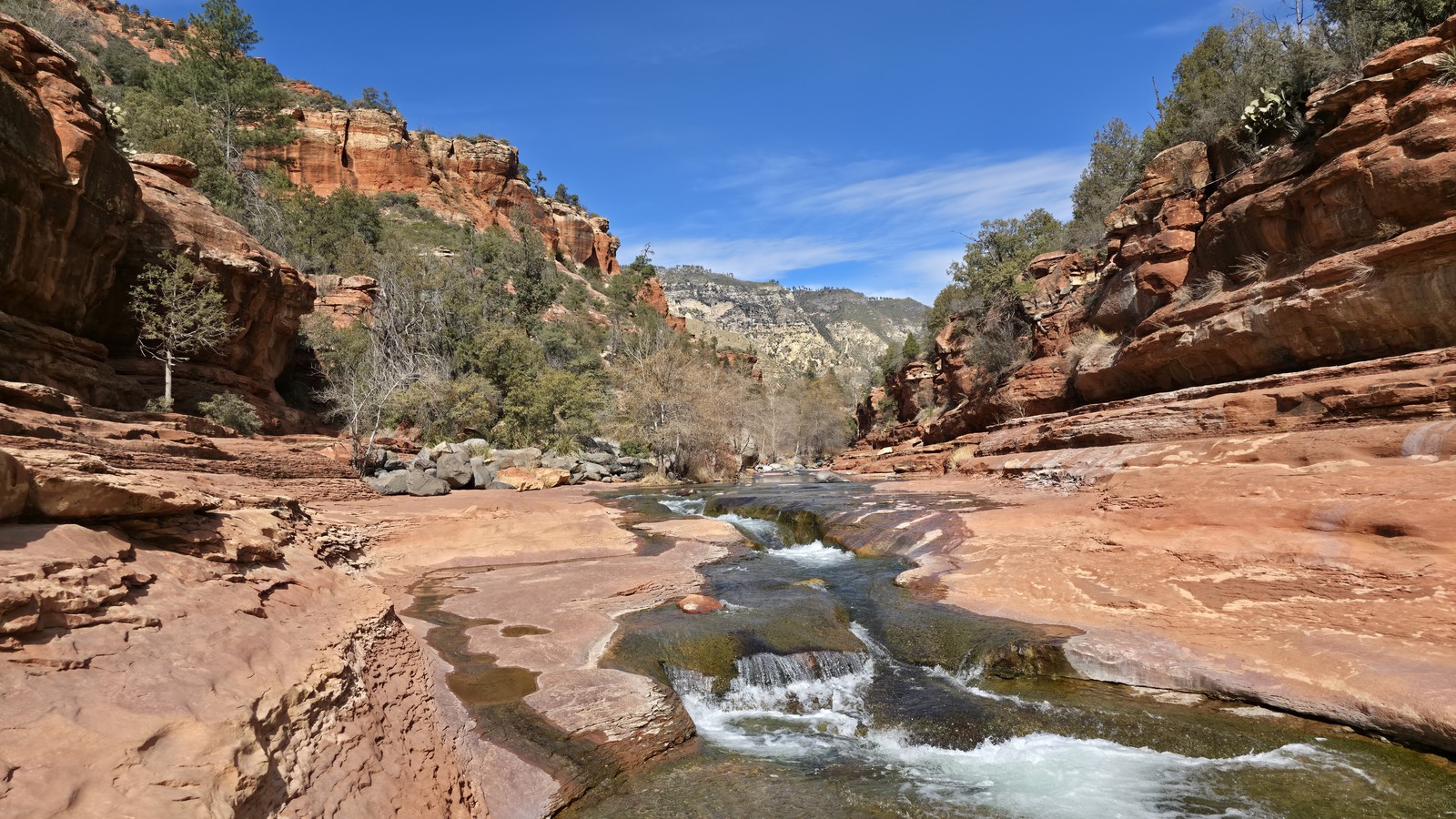
Slide Rock State Park sits in Oak Creek Canyon just north of Sedona, and it feels like two Arizona classics folded into one stop. You get the soaring red walls and polished creek stone that make this stretch of canyon so famous, and you also get the Pendley Homestead, a historic orchard property that still gives the park a strong sense of place.
That mix is what makes the park memorable. A short visit can cover the orchard, the homestead buildings, the canyon views, the picnic grounds, and the creek itself. If you stay longer, the details start to stack up: farm machinery in the open air, cottonwoods along the water, a market by the main path, and a little piece of northern Arizona history that still feels lived-in.
As of August 26, 2026, day-use entry is $20 per vehicle for one to four adults through April 2027, with an additional $5 per adult after that. The park sits at 4,930 feet, and the changing seasons show up clearly here, from April blossoms to golden fall leaves to snowy canyon walls in winter.
The First Look Sets The Mood
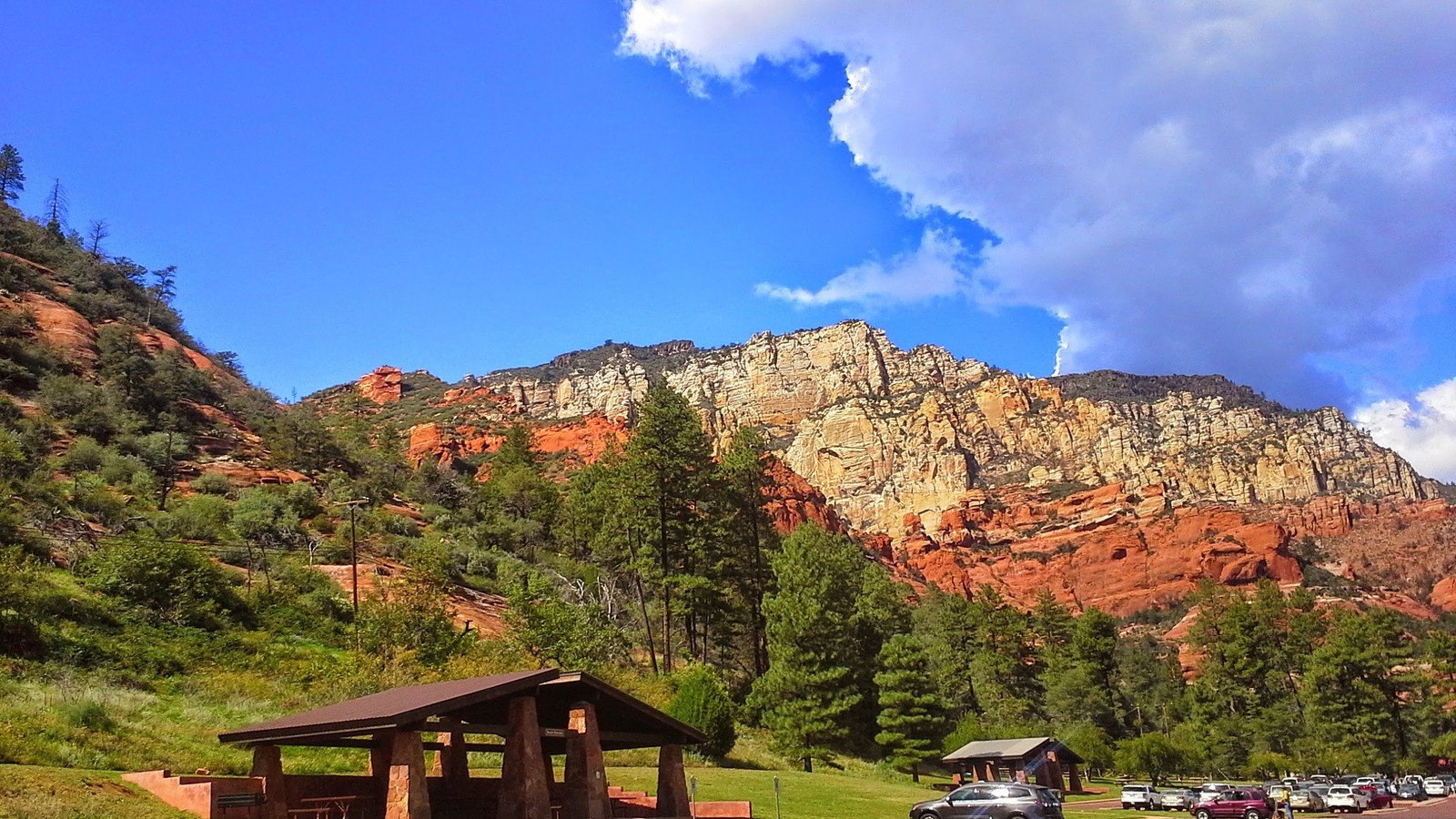
The arrival scene tells you a lot before you even start walking. The cliffs rise in layers of rust, gold, and tan, and the road into the park feels tucked into a canyon that already promises cooler air and a greener pocket of landscape than many travelers expect in Arizona. Plan on arriving by vehicle through the entry station and treat the opening hour as a smart target if you want the freshest light on the canyon walls. The park’s own rules also make the rhythm of the place clear: this is a protected corner of Oak Creek Canyon, so glass containers stay out, the roadway stays moving, and the whole visit starts with a little more care than a casual roadside stop.
The Pendley House Gives The Park Its Character
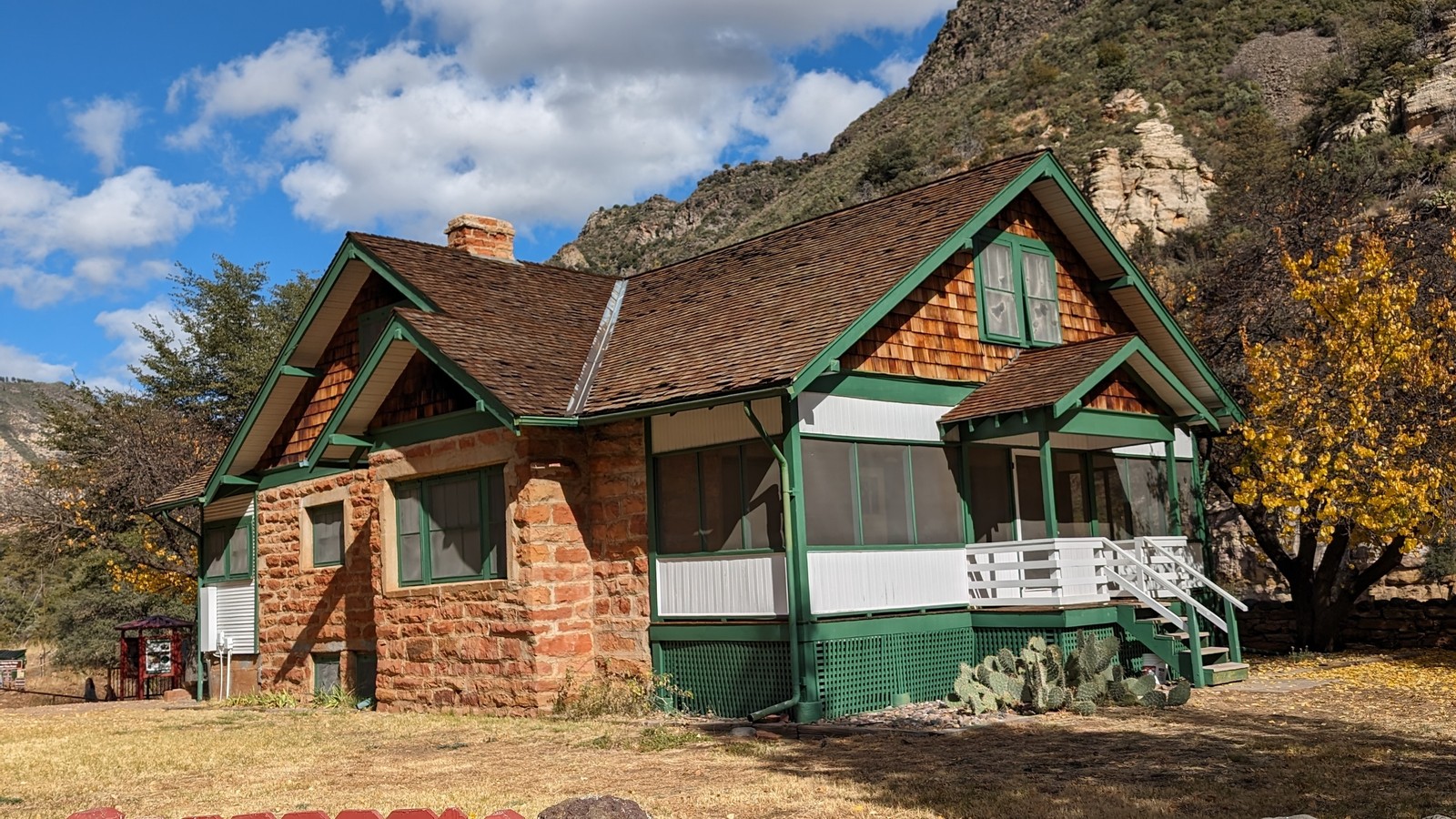
The Pendley Homestead house is the easiest reminder that this park grew from working land. Frank Pendley arrived in Oak Creek Canyon in 1907, acquired the property under the Homestead Act in 1910, and established the apple orchard in 1912. Arizona State Parks later acquired the homestead property, and Slide Rock State Park opened in October 1987.
That timeline lands clearly here because the buildings still look rooted in the canyon. The house brings a human scale to the cliffs around it, and the contrast between the crafted porch lines and the jagged red rock behind it gives the park a richer identity than a simple scenic stop. You are walking through a preserved homestead that happens to sit inside one of the state’s most photogenic creek canyons.
The Main Path Keeps History Close At Hand
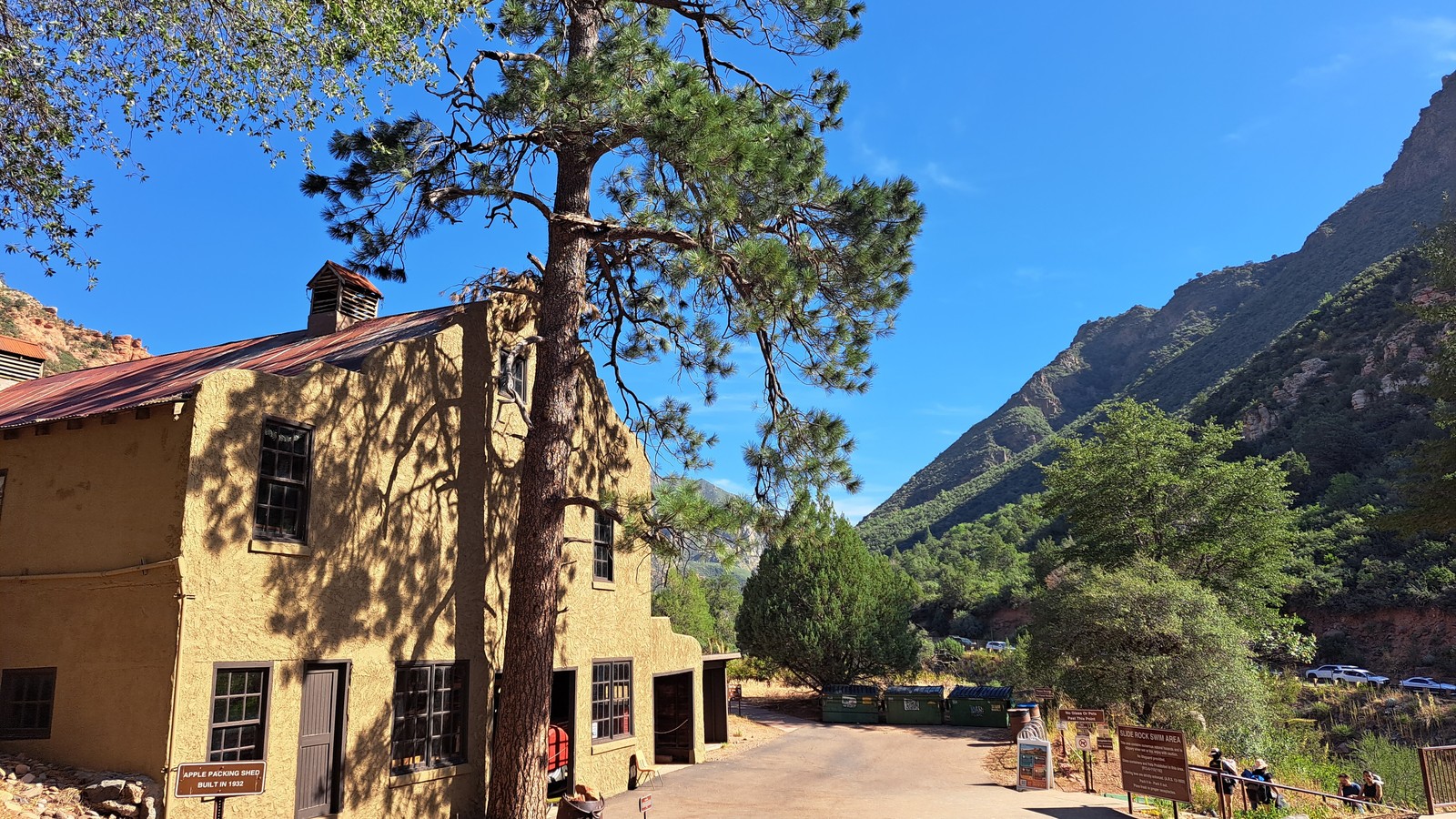
The main paved path is one of the park’s nicest features because it threads the practical side of the visit into the scenery so smoothly. You move past historic buildings, orchard views, and interpretive stops in one easy walk, and the canyon walls stay in sight almost the whole time.
The Slide Rock Market sits right off this route and adds a useful little convenience stop to the day. It carries snacks, ice, water, sunscreen, swim shoes, souvenirs, and the small essentials that can make a creek-side park day feel easier. On a quick visit, that market and the paved path make the park feel accessible. On a longer one, they give you a natural spine for exploring the homestead and the creek in a relaxed order.
The Apple Packing Shed Still Anchors The Orchard Story
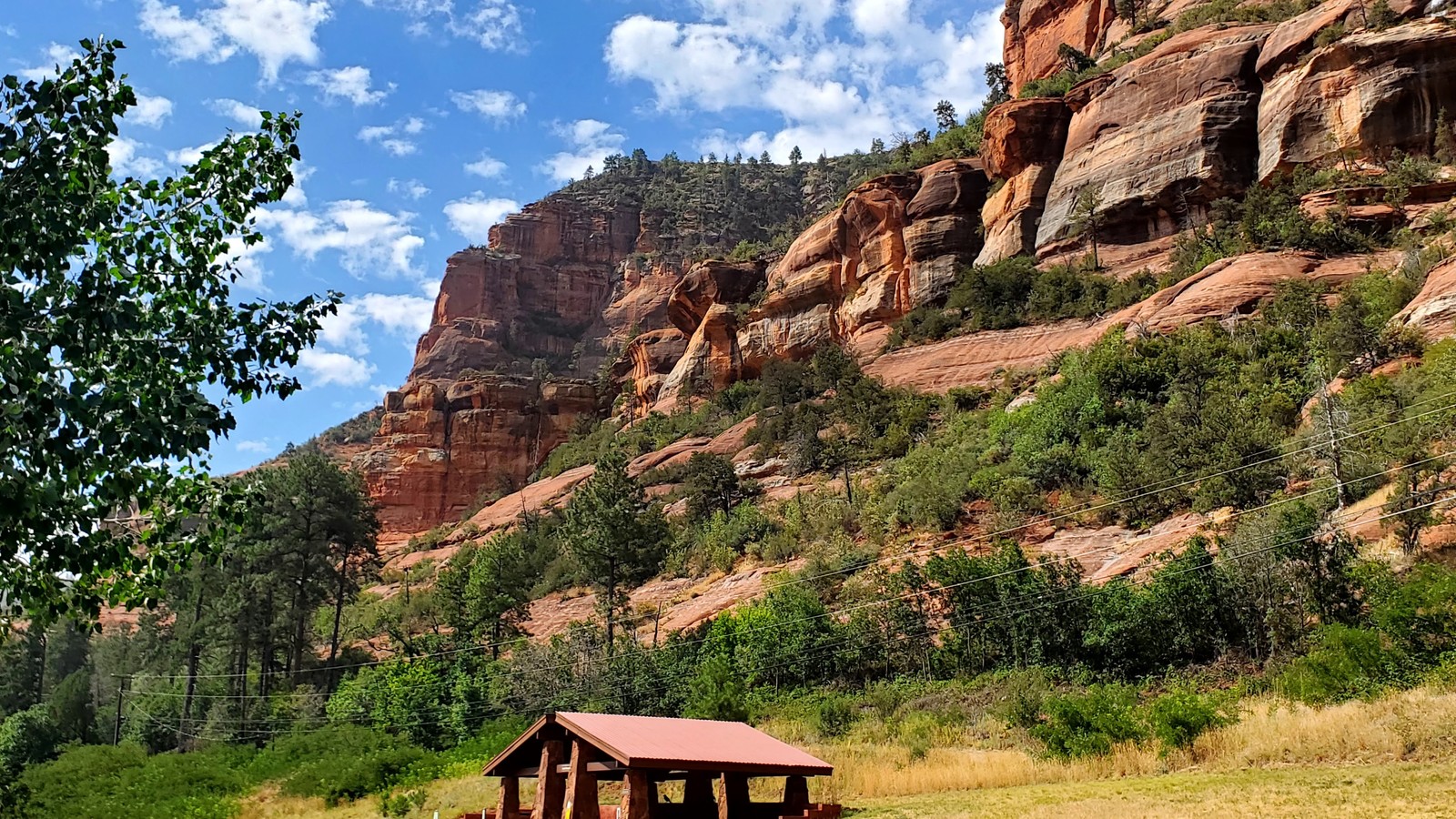
The apple packing shed is one of the strongest visual hooks in the whole park. It puts the orchard story in plain view and makes the landscape feel productive as well as beautiful. You can picture the property during its farming years, especially once you know the site still includes the historic orchard and original homestead structures. Arizona State Parks also opens the apple packing shed for ranger-staffed open house hours on weekends, which adds another layer for anyone who likes places with a clear historical thread. The park’s Fall Fest, scheduled for October 3, 2026, leans into that same orchard identity with cooler weather, red rock scenery, and seasonal color.
Orchard Rows Make The Canyon Feel Softer
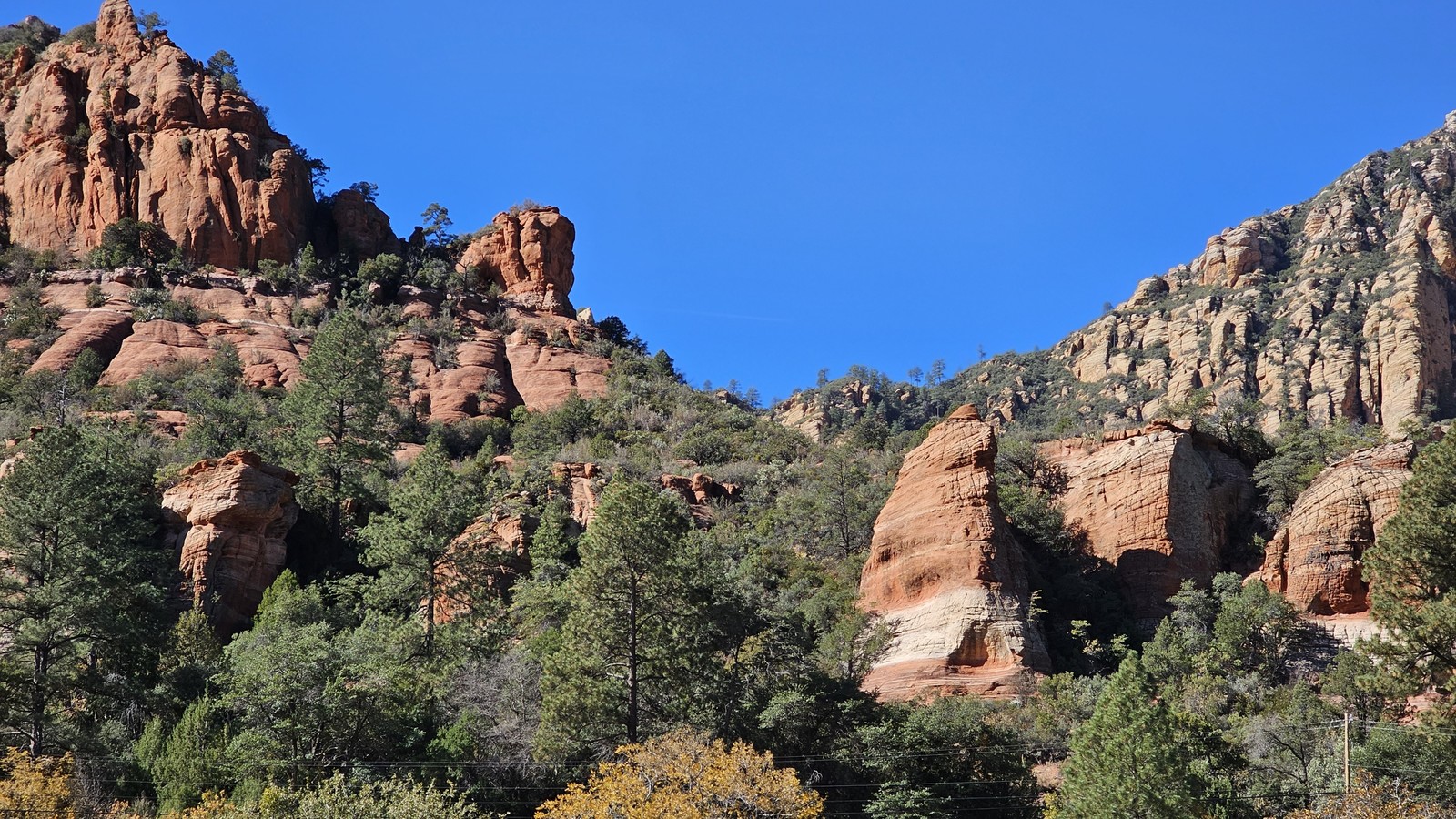
The orchard is part of the park’s magic because it changes the mood of Oak Creek Canyon. Red rock parks often lean hard into drama. Slide Rock gets that drama, then adds rows of apple trees and pockets of shade that soften the whole setting.
There are just over 300 apple trees on the property, and spring brings one of the prettiest transformations in the park when the orchard comes into bloom around the middle of April. In fall, the same ground shifts toward yellow leaves and harvest-season color. Even when the creek first pulls your attention, the orchard is what turns the park from a scenic canyon into a place with its own rhythm and seasons.
Old Irrigation Gear Keeps The Farm Legacy Visible
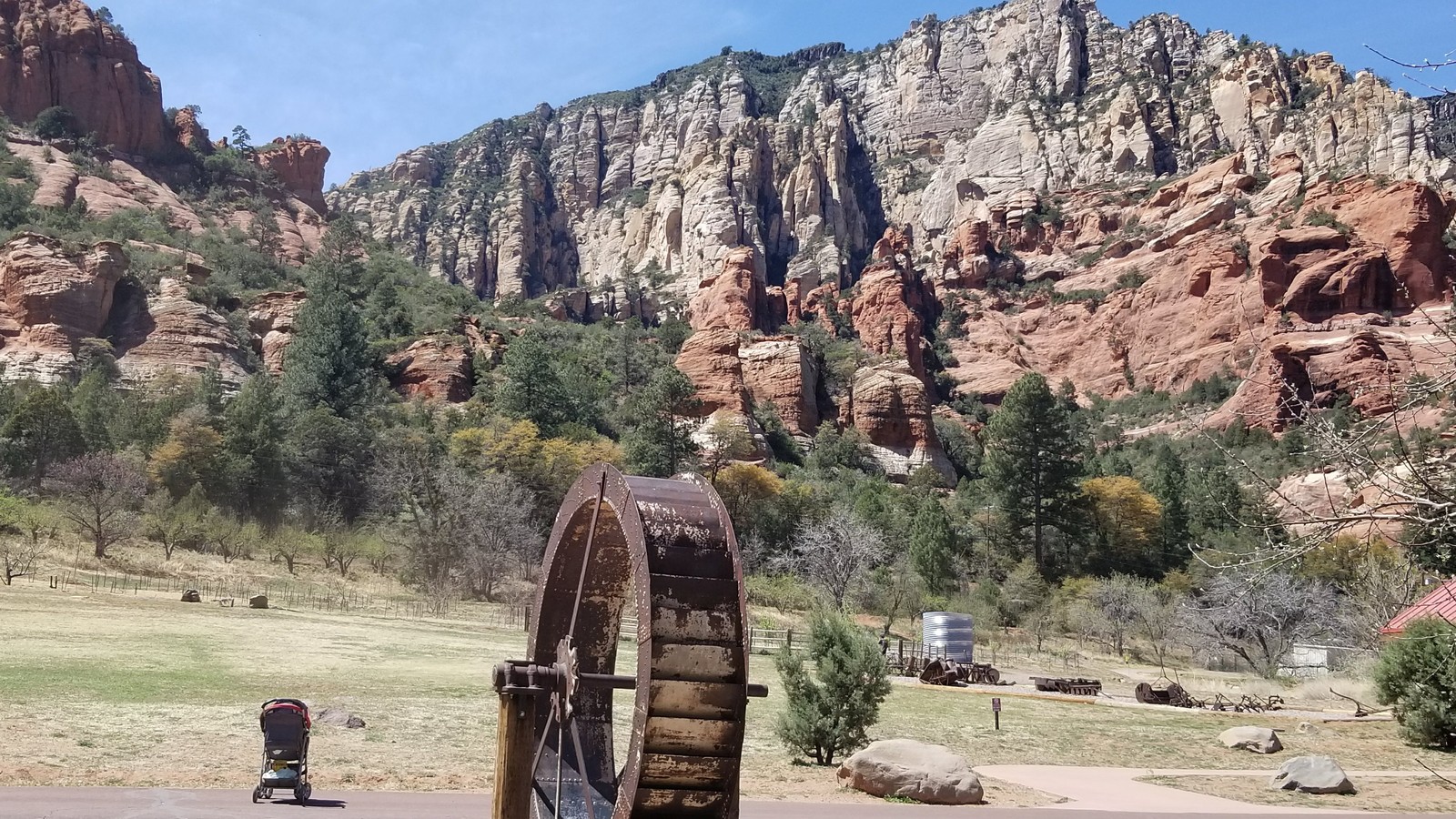
Old irrigation and farm equipment scattered around the homestead help explain how ambitious this property was. Pendley succeeded here by building an irrigation system that Arizona State Parks still highlights as a defining part of the site’s history, and seeing the machinery in the open air gives that story a solid physical presence.
The setting helps too. A wheel, a field, and a line of cliffs behind them can say a lot in a single glance. This is still a canyon park, still a place of water and stone, and the farming tools make the human story feel fully tied to the land around them.
Sandstone Shelves Turn The Canyon Into A Natural Amphitheater
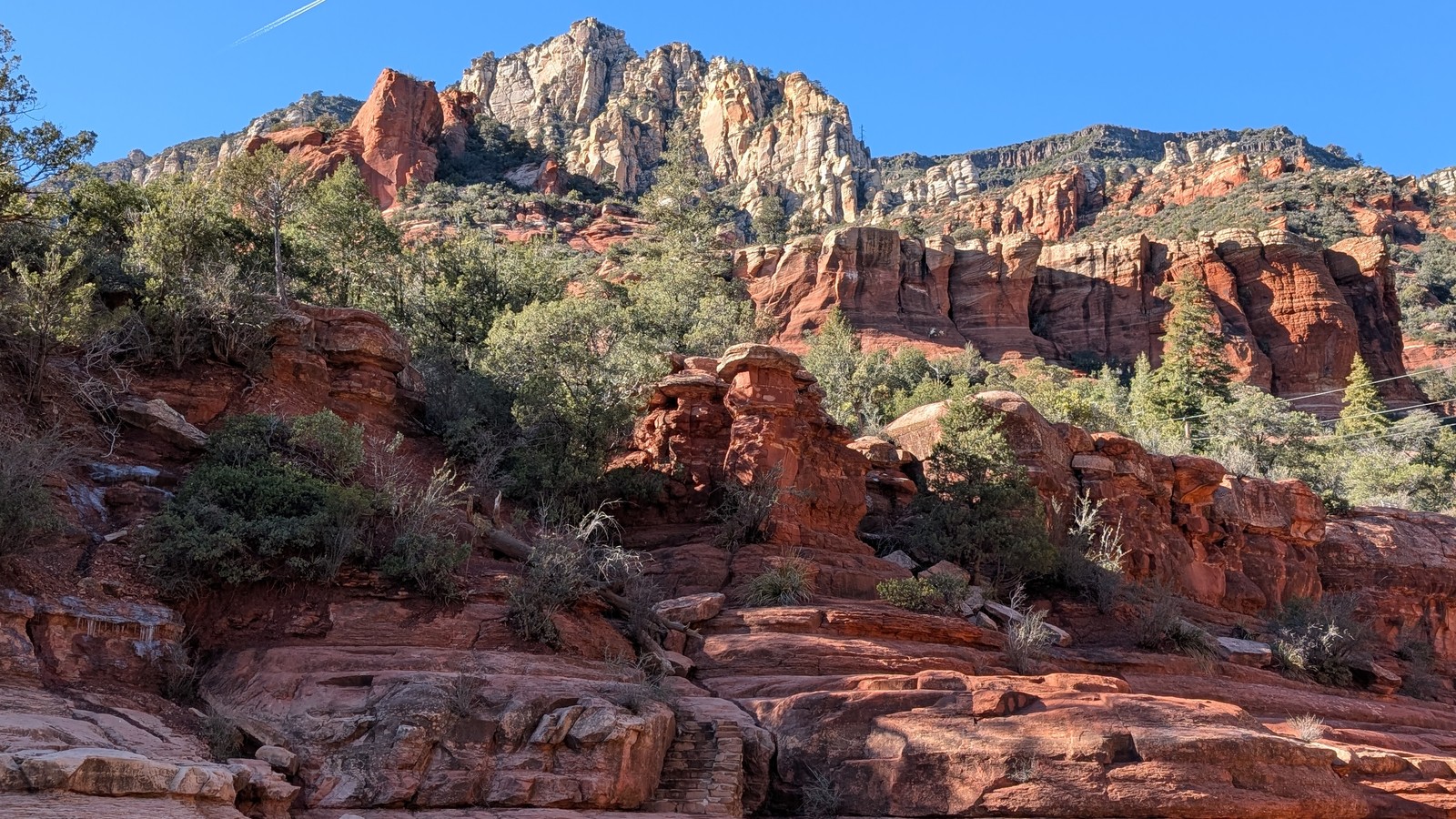
The sandstone shelves along Oak Creek are one reason the park feels so visually different from a forested mountain picnic area or a typical desert overlook. The canyon floor opens into broad red ledges, and those ledges create room to pause, look around, and take in the scale of the walls above you.
These shelves also help explain why Slide Rock became such a destination. The creek is woven into the stone in a way that feels playful and sculpted. Even on a quiet walk, the polished surfaces and smooth channels give the whole place a sense of motion.
Oak Creek Brings Cool Color To The Red Stone
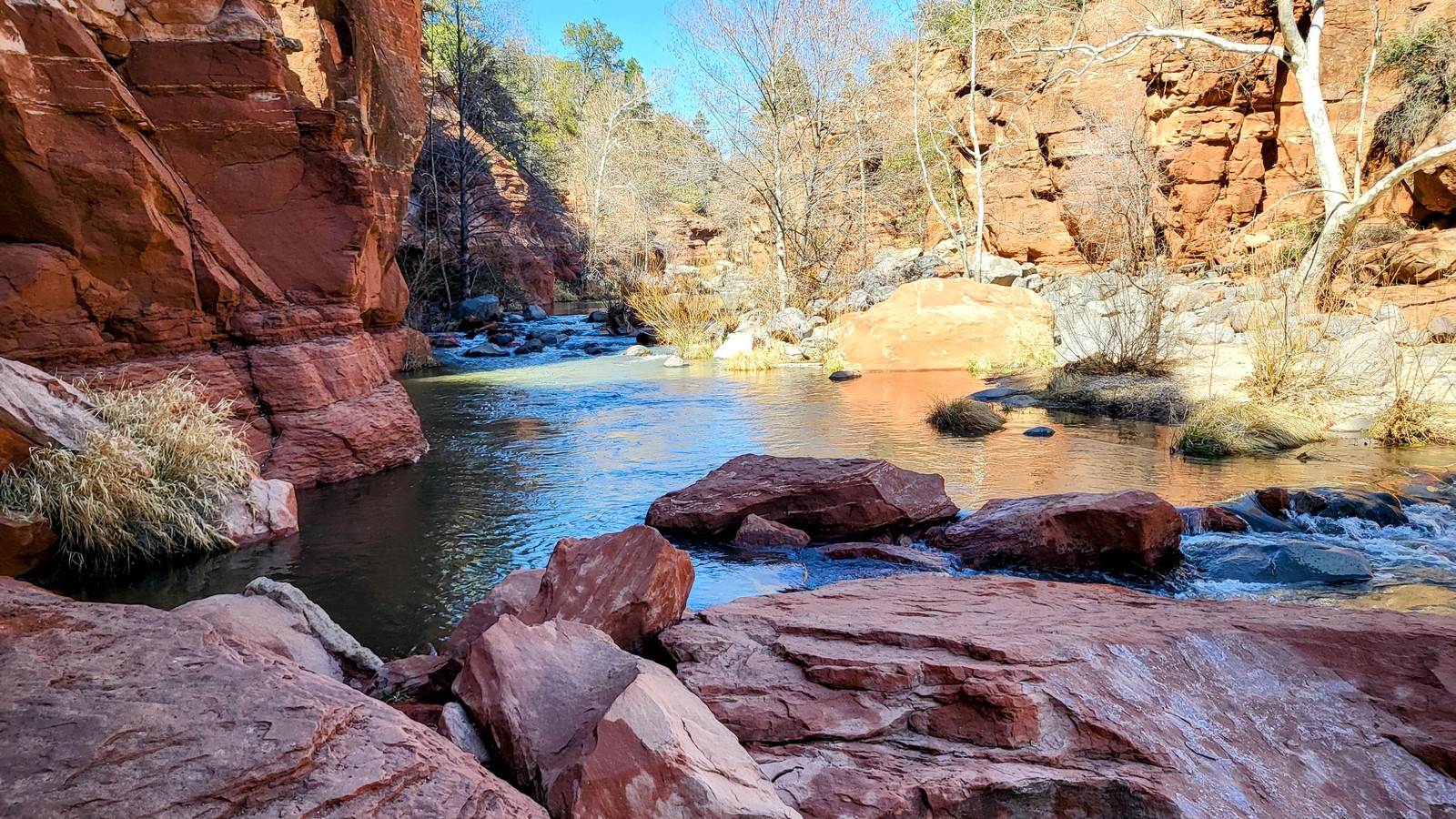
Oak Creek is the park’s central texture. The water adds blue and green reflections to a canyon palette that already looks vivid, and the creekside corridor brings in cottonwoods, shaded banks, and pockets of calm between the brighter rock faces.
The water also shapes the feel of the visit in every season. Warm months bring a cool current through the canyon. Autumn frames the creek with yellow leaves. Winter turns the same water corridor into a crisp, high-country scene that feels almost alpine for a few moments. That range is part of the appeal here. Slide Rock gives you a creek canyon that stays interesting long after the first big photo stop.
The Famous Chute Looks Like A Geology Lesson With Momentum
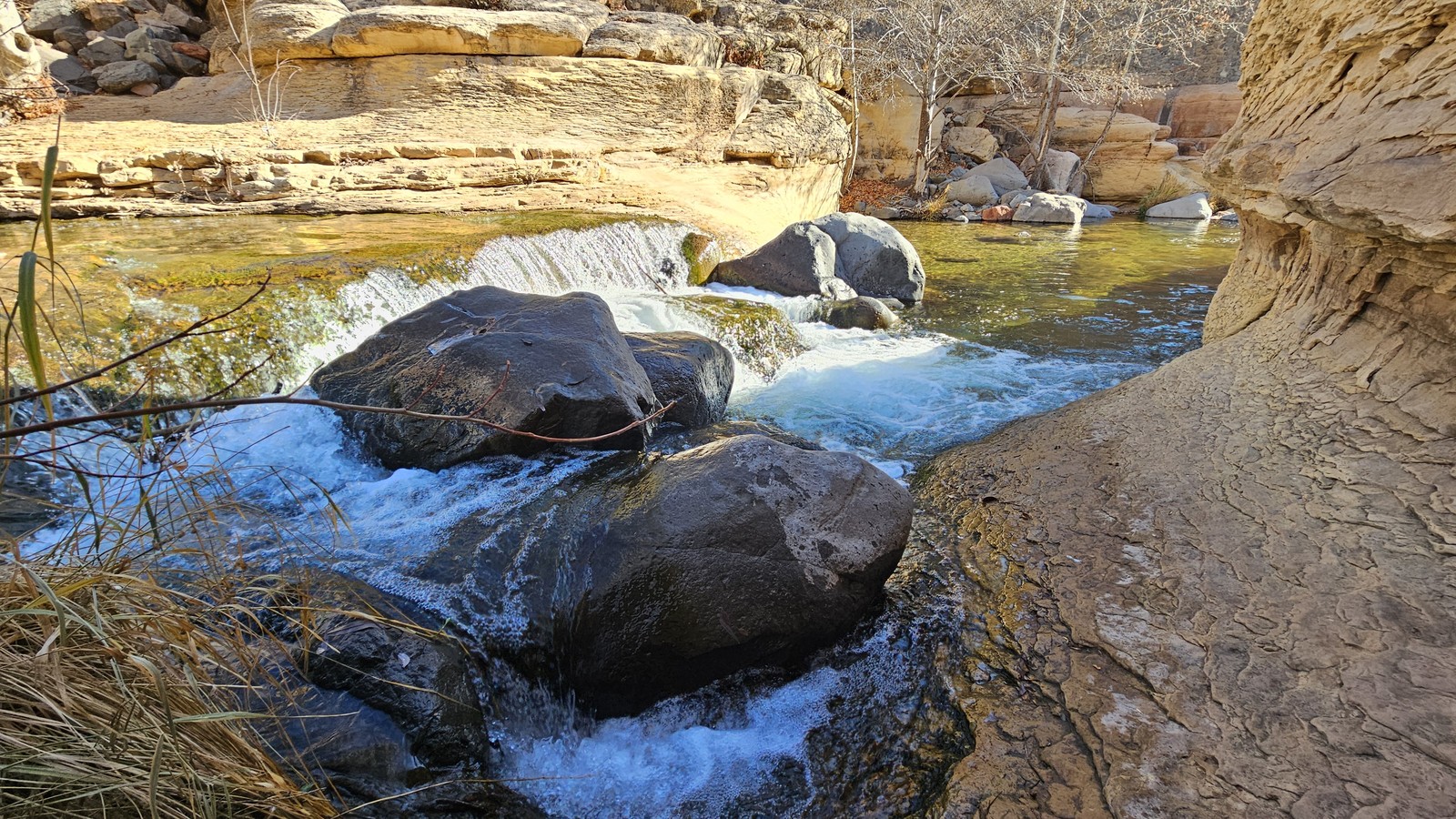
The rock slide itself is easier to appreciate when you stop thinking about the park as a simple swimming spot and start looking at the shape of the channel. The named slide runs about 80 feet long, narrows to roughly 2.5 to 4 feet wide, and drops at about seven percent from top to bottom. That combination gives Oak Creek a slick little sandstone runway that looks both natural and improbable. It is also a great example of how the park blends energy and scenery. The chute sits inside a broader half-mile swimming area, yet the stone around it still holds the same warm red tones and smoothed contours that make the rest of the canyon so handsome. You can admire the feature as a landmark even before the rest of the park starts to pull your attention in other directions.
Picnic Lawns Stretch Out Beneath The Cliffs
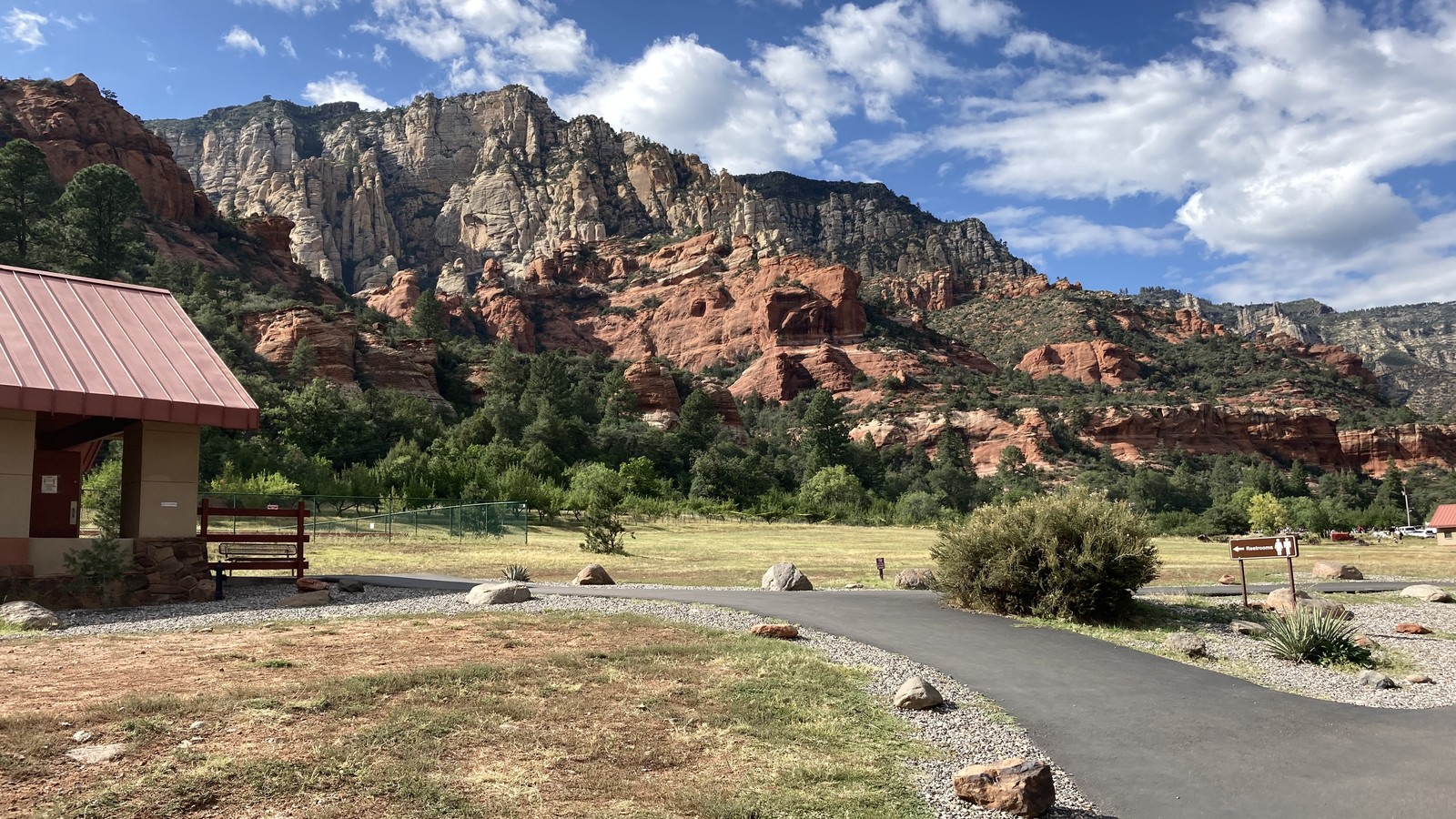
Slide Rock does a nice job with its day-use spaces. The park has 15 first-come picnic areas for small groups near the entry and parking area, plus two covered ramadas that can each hold about 50 people. That gives the place a broader range than a quick scenic stop or a single trailhead. If you want a family day in the canyon, the layout makes that easy. You can bring lunch, settle into the shade, walk the short trails, spend time by the creek, and still feel close to the historic core of the park. The cliffs stay so present in every direction that even a simple picnic table stop feels scenic.
Snow Gives The Canyon A Completely Different Personality
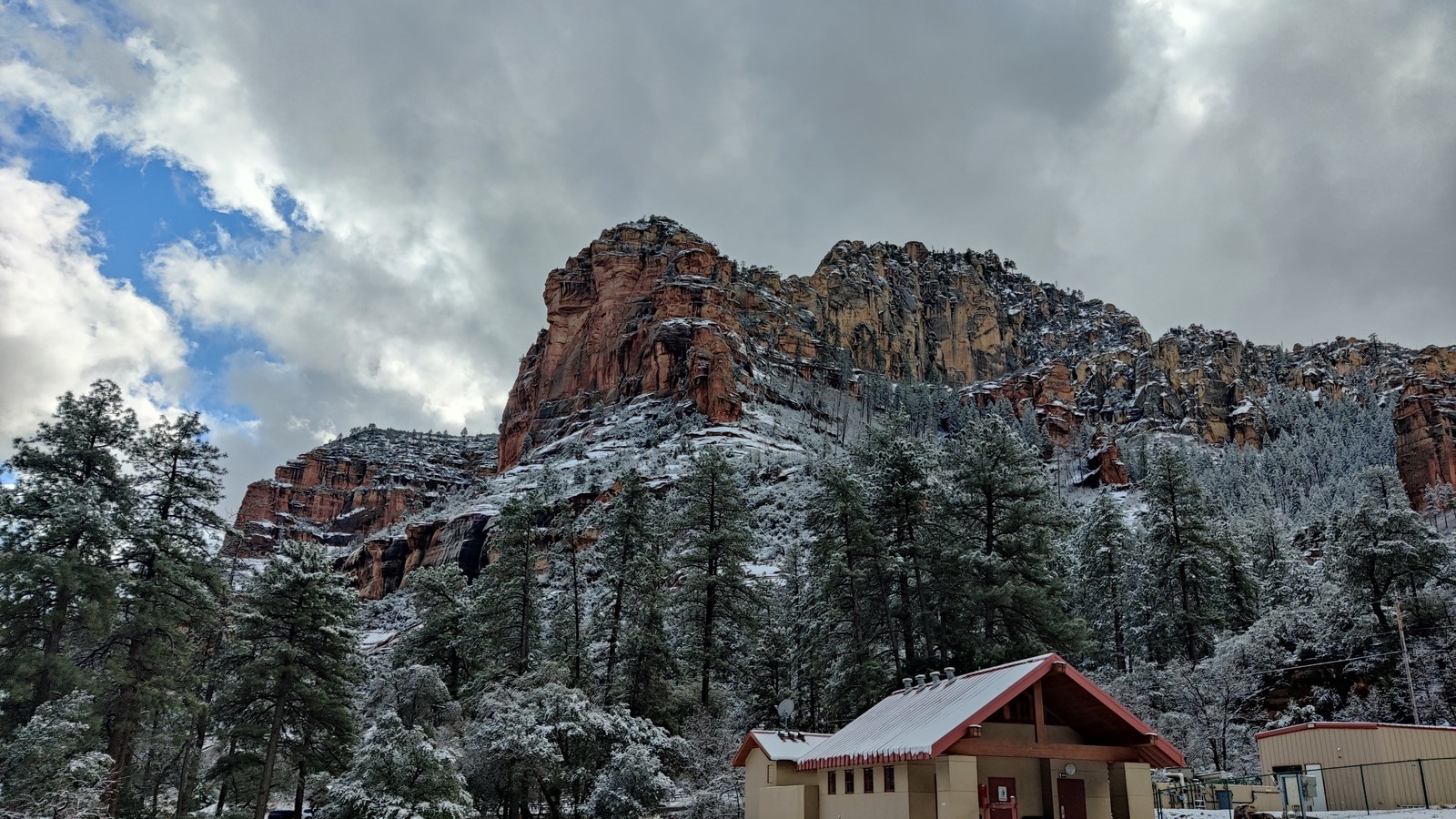
Winter might be the most surprising season here. The park averages about 25 inches of snow annually, and when snow settles on the cliffs and trees, the red rock takes on a sharper, quieter look. The usual warmth of the canyon shifts toward something crisp and luminous.
That season change is a big part of why Slide Rock works as more than a summer landmark. You can come for blossoms, creek weather, yellow leaves, or snow-framed canyon walls and still feel like you have arrived at the right moment. Few Arizona parks pack that much seasonal variety into 43 acres.
The Creek Route Rewards A Little Extra Wandering
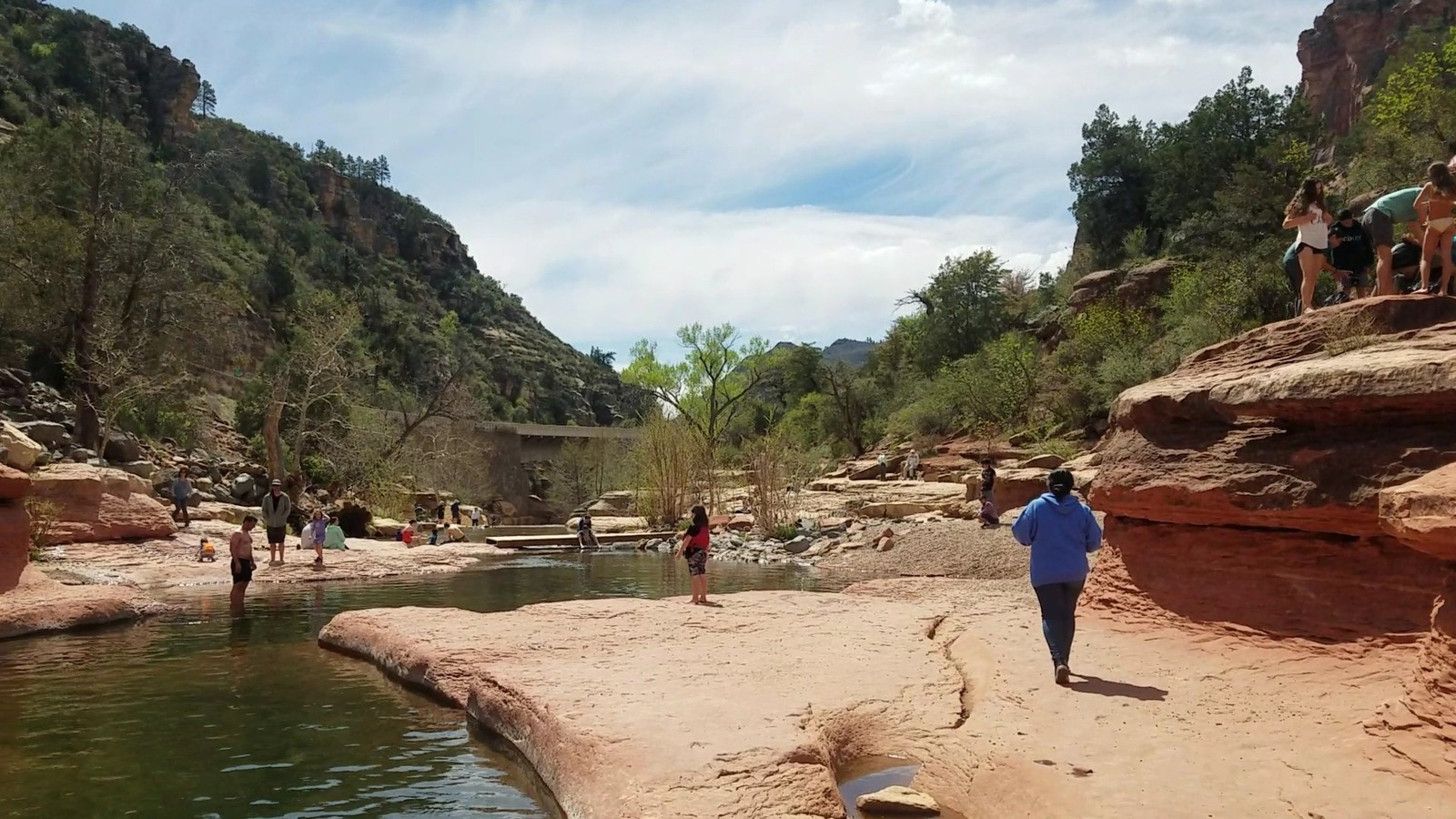
The short trail network is another reason this park keeps delivering after the headline attraction. The paved Pendley Homestead Trail runs a quarter mile and stays easy for most visitors. The Slide Rock Route covers about 0.3 mile and leads down toward the creek. The Clifftop Nature Trail adds another quarter-mile option with a higher vantage.
Those distances are modest, which is part of the charm. You can cover a lot of visual ground in a short time: orchard rows, historic buildings, creek bends, cliffs, and wildlife habitat all fold into a compact visit. If you want one Arizona state park that feels scenic, historic, and distinctly local all at once, Slide Rock State Park earns a place very high on the list.